Photography Icons: Enhancing Visual Communication Across Design Projects
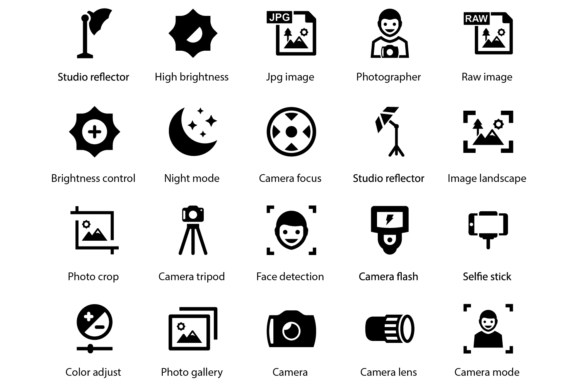
Photography Icons are more than just decorative elements—they serve as essential tools for visual clarity and communication in a wide range of digital and print design workflows. Whether you're building a website, creating a presentation, or designing an infographic, these icons offer a consistent and professional visual language that supports user understanding and engagement. Meticulously designed and available in multiple formats, including fully editable AI and EPS files, transparent PNGs, and scalable SVGs, these icons are crafted to fit seamlessly into modern design processes.
How Photography Icons Fit Into the Design Workflow
Design projects—whether for business, education, or personal use—require a balance of aesthetics and functionality. Photography Icons help bridge that gap by offering a standardized visual shorthand for concepts related to photography, cameras, lenses, and image editing. They are particularly useful in environments where visual cues need to be both intuitive and visually appealing.
Before a project begins, these icons can be used during the planning phase to sketch out user interface layouts or to create visual storyboards. During the execution phase, they integrate smoothly into design tools like Adobe Illustrator, Figma, or Sketch, thanks to their compatibility with vector formats. After the main design is complete, they serve as polished finishing touches that enhance navigation and user experience.
Applications Across Different Use Cases
The versatility of Photography Icons makes them ideal for a wide array of applications:
- Website Development: Use them in navigation menus, image galleries, or feature sections to guide users intuitively through the site.
- Promotional Materials: Incorporate them into flyers, banners, or social media graphics to highlight photography-related services or features.
- Presentations: Add visual interest to slides by using icons to represent key points or categories related to photography tools and techniques.
- Infographics: Simplify complex data by using icons to represent categories or actions, making the content more digestible and engaging.
- Educational Resources: Use them in tutorials, guides, or online courses to illustrate equipment types, shooting modes, or editing steps.
Each of these use cases benefits from the clarity and visual consistency that Photography Icons provide. By integrating them early in the design process, creators can ensure that their visual messaging aligns with the intended user experience.
Compatibility and Integration with Other Tools
One of the major strengths of Photography Icons is their format flexibility. The inclusion of AI and EPS files allows for full customization, enabling designers to tweak colors, shapes, or details to match brand guidelines or project requirements. SVG files ensure crisp visuals across devices and screen sizes, making them ideal for responsive web design. Meanwhile, the 256×256 pixel transparent PNGs offer high-quality raster options for platforms that don’t support vector formats.
These icons integrate well with popular design and development tools such as:
- Adobe Creative Suite (Illustrator, Photoshop, InDesign)
- Figma, Sketch, and Adobe XD for UI/UX design
- WordPress themes and page builders like Elementor or Divi
- Microsoft PowerPoint and Google Slides for presentations
- Canva and other drag-and-drop design platforms
Because they are delivered in universally accepted formats, there’s minimal friction when incorporating them into existing workflows. Designers can import them directly into projects, scale them as needed, and maintain visual consistency without additional effort.
Practical Implementation Tips
To get the most out of Photography Icons, consider the following best practices:
- Establish Visual Consistency: Choose a style (flat, outline, glyph, etc.) that aligns with your overall design system. Mixing icon styles can lead to visual clutter.
- Use Icons Purposefully: Don’t overload your design with icons. Use them where they add value—such as labeling buttons, illustrating concepts, or organizing content.
- Optimize for Performance: When using SVGs on the web, ensure they are properly optimized to reduce file size and improve page load speed.
- Maintain Accessibility: Pair icons with text labels or use ARIA attributes when appropriate to ensure screen readers can interpret their meaning.
- Organize Your Assets: Store icons in a centralized folder or design system library so they’re easy to access and reuse across projects.
By following these guidelines, you can ensure that your use of Photography Icons enhances, rather than distracts from, your overall design goals.
Long-Term Benefits and Scalability
Design assets that stand the test of time are those that offer both quality and adaptability. Photography Icons are built with longevity in mind—offering scalable vector formats that remain sharp and clear regardless of how design trends evolve. Their compatibility with both current and future design software ensures that they remain useful across multiple projects and platforms.
For professionals working on multiple design systems or brands, maintaining a library of reusable icons can significantly improve efficiency. These icons can be reused across campaigns, websites, and marketing materials, reducing the need to source or create new visuals each time.
Additionally, because the icons are fully editable, they can be adapted to reflect new brand colors, design guidelines, or stylistic preferences without requiring a complete redesign. This level of flexibility makes them a valuable long-term asset for both individual creators and design teams.
Conclusion
Photography Icons are a powerful addition to any design toolkit. Their thoughtful design, format versatility, and ease of integration make them indispensable for a wide range of creative and professional tasks. Whether you're building a website, designing a presentation, or crafting promotional materials, these icons help streamline your workflow while enhancing visual communication. By incorporating them strategically and consistently, you can elevate the clarity, professionalism, and effectiveness of your designs across multiple platforms and use cases.